
'Today, three areas give banks a big headache -- steel, power, infrastructure.' 'Three Cs are very critical in lending -- character, capacity and collateral of the borrower.'

Atal Bihari Vajpayee would seek to placate the hawks in the RSS by stating that the writing of history should not be one-sided. At the same time, he would project a moderate 'Nehruvian' image of himself as the archetypal liberal politician who would strive to attain a balance between conflicting viewpoints. A fascinating profile of the former prime minister and Bharat Ratna by Paranjoy Guha Thakurta and Shankar Raghuraman.

Governments must give companies a hearing before blacklisting them.

Volunteers have been asked to provide details of their core competencies for future projects, says Mayank Mishra
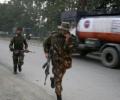
'No amount of economic measures or prosperity in Kashmir will make any dent in the situation there. The average Kashmiri understands the Pakistani game and is unlikely to prefer Pakistan over India. But the Pakistanis have made clever use of religious symbols and slogans to force religious-minded Kashmiris to support them. India has failed to counter this posturing by the separatists,' says Colonel Anil A Athale (retd).

From selling 14,000 Jeeps in 1973, we slipped to selling just 7,000 vehicles within just three-and-a-half years by 1976.

Nobutaka Kitajima, chief investment officer -- equity, LIC Nomura Mutual Fund, tells Business Standard the reaction to the Fed's statements has been overdone and the current downturn has punished certain stocks much more than their inherent economic worth and business potential.

'India is no longer the India of the '70s and the '80s.' 'It's a large country with the fastest growing economy.' 'In working with India, you just can't go and humiliate the nation publicly.' USIBC President Mukesh Aghi tells Aziz Haniffa/Rediff.com about how he advises American companies to do business with India, what he thinks of Modi's government and the way forward for the India-US relationship.
Aditya Puri thinks the government is on track.
For some, he is a visionary who grew his one-channel firm into a media giant by the sheer dint of his courage; for others, he is a compulsive risk-taker.
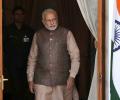
Ministers in the Narendra Modi government have been busy making presentations on their 100 days of work. But what these presentations do not mention is that decisions by ministers have been few, with plenty of papers and files moving to the Prime Minister's Office, which is increasingly emerging as a centralised clearance point, even for routine and ordinary issues. Though policy paralysis was a term used freely for the United Progressive Alliance regime, questions are now being raised about pending decisions across ministries and whether at least some ministers have turned redundant.

Opposition on Monday picked holes in various government decisions like demonetisation and surgical strikes as well as allocation of funds for MNREGA, agriculture sector and Scheduled Castes, saying it has failed on all fronts despite which it is trying to "fool" the people.
 © 2026 Rediff.com - Advertise with us - Disclaimer - Privacy Policy - Sitemap - Feedback - About us - Terms of use - Grievances